
When a tree falls on your property during a Texas storm, you need to know who to call and what to do. Here is a practical guide to handling emergency tree situations in the DFW area.
Recognizing a Tree Emergency
Not every tree problem is an emergency, but some situations require immediate professional attention. A tree that has fallen on your house, car, fence, or any structure is an obvious emergency. A tree or large branch blocking your driveway, sidewalk, or a public road needs prompt removal. A tree leaning at a new angle after a storm, especially if it is leaning toward your home or a neighbor's property, should be treated as urgent even if it has not fallen yet.
Power lines are the most dangerous scenario. If a tree or branch has fallen on or near power lines, do not approach it. Do not try to move it. Do not let anyone near it. Call 911 and your utility company immediately. Downed power lines can energize the ground around them, creating a lethal hazard that is invisible to the eye.
Less obvious emergencies include large hanging branches (sometimes called widow-makers) that are cracked but have not fallen yet, split trunks where the tree has partially separated but is still standing, and root heave where the root ball has visibly lifted out of the ground. All of these situations can escalate quickly, especially if more wind or rain is in the forecast.
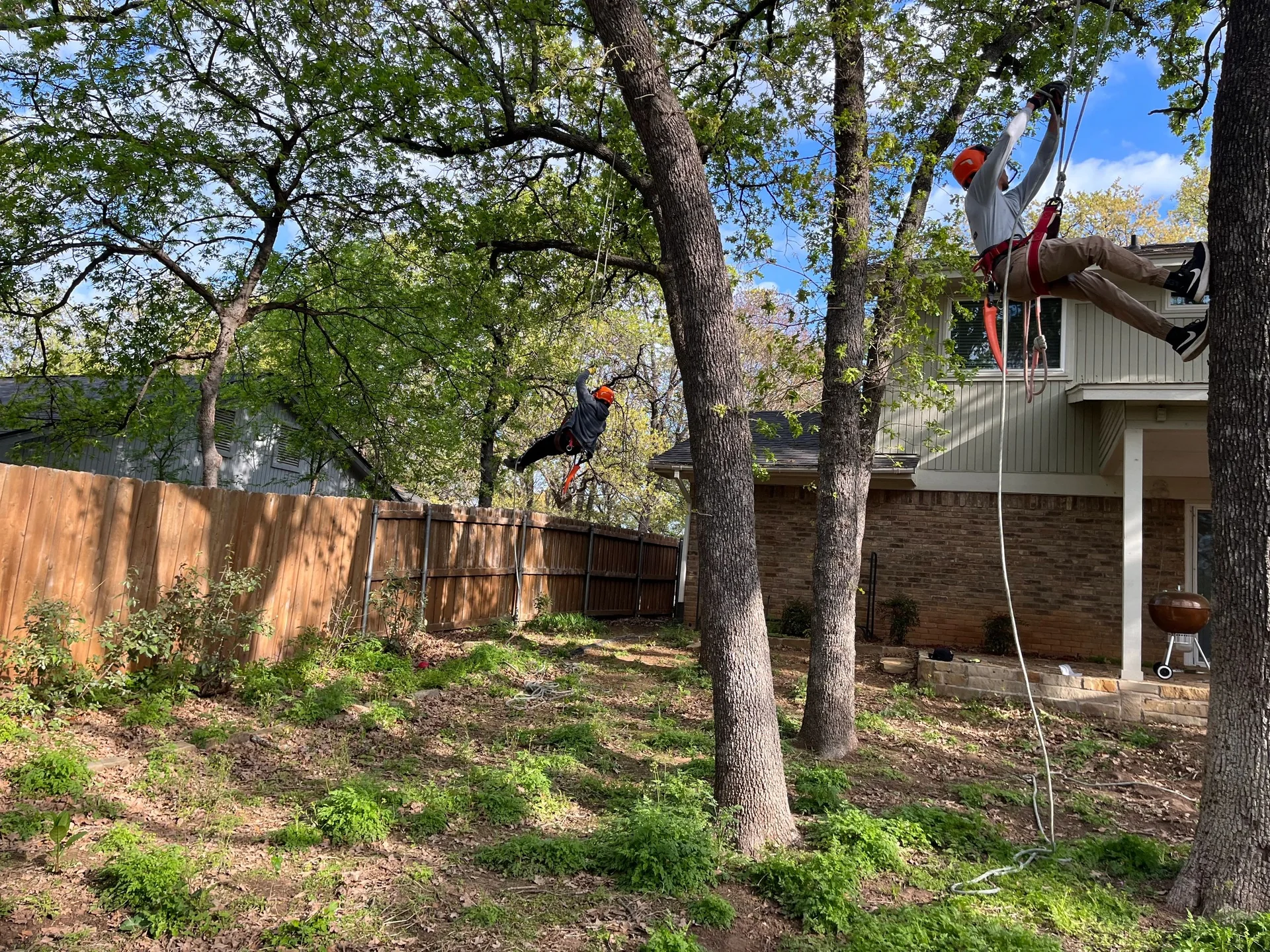
Tree trimming and emergency tree service in Dallas
What to Do Before the Tree Service Arrives
Safety comes first. Keep everyone, including pets, away from the damaged tree. Even if the tree looks stable, internal damage may not be visible, and additional collapse can happen without warning. If the tree has damaged your home, do not enter the damaged area until a professional has assessed the structural integrity.
Document everything for your insurance claim. Take photos and video from multiple angles showing the tree, the damage it caused, and the surrounding area. If possible, photograph the tree's root system or the point where it broke. This documentation will be valuable when you file your claim.
If water is entering your home through damage caused by the tree, take reasonable steps to prevent further damage, such as covering the opening with a tarp. Insurance companies expect you to mitigate ongoing damage, and they will typically reimburse you for reasonable emergency measures.
Call your insurance company as soon as possible. Most homeowner's policies cover tree removal when the tree damages a covered structure. The key word is "structure." A tree that falls in your yard but does not hit anything may not be covered for removal, though the specifics vary by policy.
How Emergency Tree Removal Works
Emergency tree removal follows a different process than a planned removal. The first priority is making the situation safe. This might mean removing the portion of the tree that is on your roof before dealing with the rest of the trunk and branches. It might mean cutting away branches that are tangled in power lines (only by qualified crews with utility clearance) before addressing the main trunk.
The crew will assess the situation and develop a plan that prioritizes safety, then property protection, then cleanup. Heavy equipment like cranes may be needed for large trees in tight spaces. The work is methodical and deliberate. Rushing through an emergency removal is how accidents happen.
Timeline expectations vary. If a tree is on your house and rain is coming, a good company will get a crew there within hours, often the same day. For less urgent situations, like a tree blocking part of your driveway, response within 24 hours is typical during busy storm seasons. During major storm events that affect the entire DFW area, wait times can stretch longer as every tree service in the region is working around the clock.
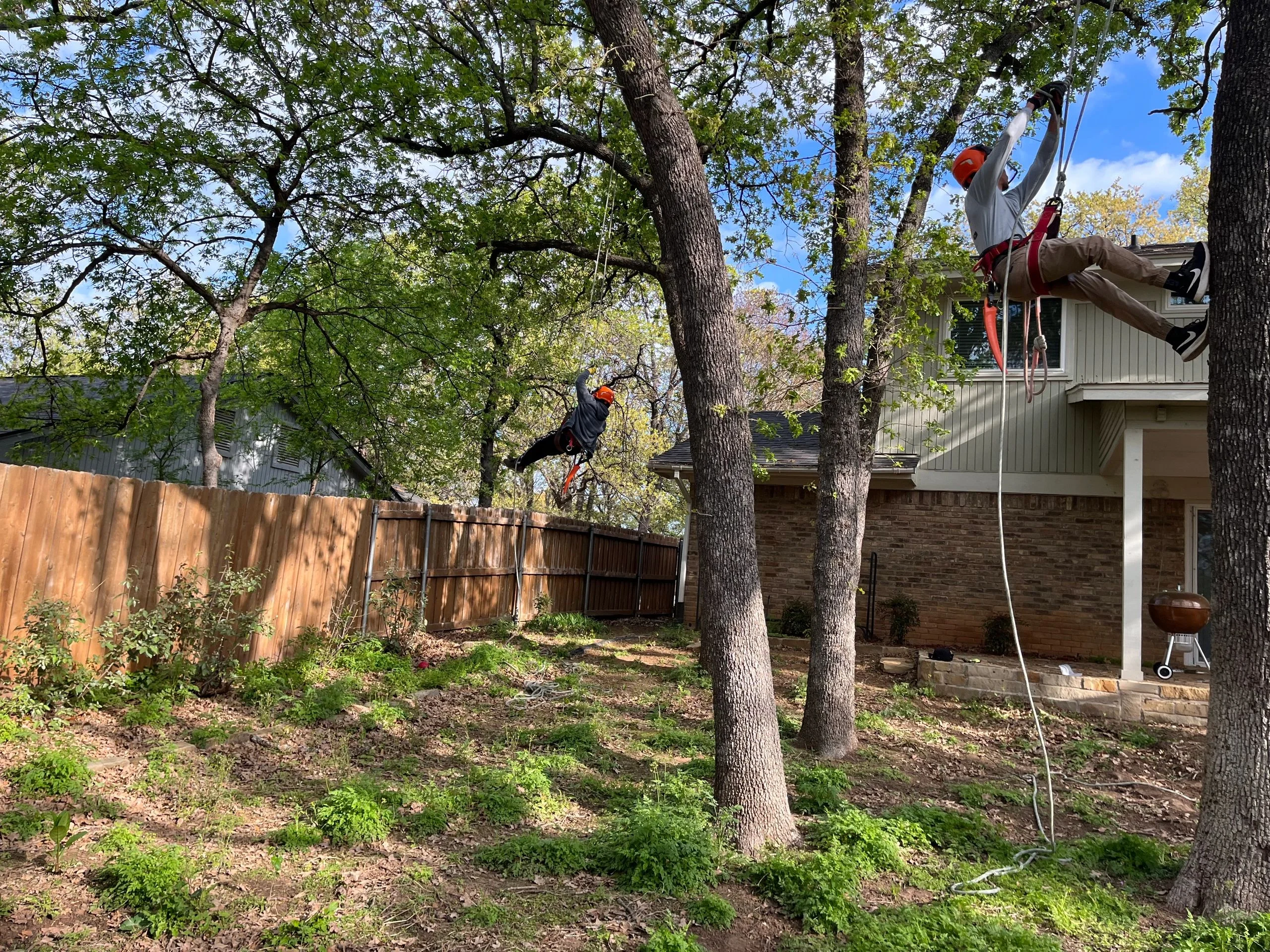
Professional tree removal service by Godoy's Wolves
Choosing an Emergency Tree Service in DFW
After a major storm, you will see trucks from out-of-state tree companies flooding into the DFW area. These storm chasers are looking to capitalize on the surge in demand. While some are legitimate operations, many are not insured, not licensed, and not accountable if something goes wrong.
Stick with a local company that has an established presence in the community. Ask for proof of insurance before any work begins. A legitimate tree service will have no problem providing a certificate of liability insurance and workers compensation coverage. Check their Google reviews and ask for references from recent emergency jobs.
Get a written estimate before work begins, even in an emergency. A reputable company will give you a clear price for the work, not a vague "we will figure it out when we are done" answer. Emergency rates are higher than standard rates, and that is normal, but the pricing should still be transparent.
At Godoy's Wolves, we serve the entire DFW Metroplex and prioritize emergency calls. We carry full insurance, provide written estimates, and our crews are experienced with every type of storm damage scenario that North Texas weather can produce.
Call Now for Emergency Tree Service
Godoy's Wolves serves the entire Dallas-Fort Worth Metroplex. Licensed, insured, and ready to work.